Toolkit
Overview
This toolkit provides a structured, evidence‑based roadmap for rural communities and youth leaders, health departments, and local organizations to design, implement, and evaluate awareness and behavior‑change campaigns that reflect community voices, values, and needs. Drawing on lessons from the Creating the Change campaign, this resource offers a practical, step‑by‑step process to plan, launch, and sustain efforts addressing mental health, substance use, stigma, and social connection.
Each rural community is unique—so are its challenges, strengths, and ingrained values. This toolkit will help you:
- Define your campaign’s purpose and focus areas, emphasizing mental health and substance use as community priorities.
- Identify local partners, strengths, and resources to support sustained behavioral health promotion.
- Understand your audience so messages are culturally relevant and resonate with those most affected.
- Create relatable, non‑judgmental, hopeful messages that reduce stigma and normalize seeking help, treatment, and recovery.
- Choose trusted community channels to share your message.
- Equip local leaders with evidence‑based, community‑informed tools to promote resilience.
- Engage the community in co‑creating content that reflects lived experience and builds protective factors like connection and belonging.
- Plan and evaluate your campaign to track impact and support long‑term healing and change.
Approach
This toolkit blends health promotion with social marketing principles to guide design, implementation, and evaluation.
It relies on locally informed, tailored messaging developed through participatory processes that reflect community values, identify barriers, and promote sustainable behavior change.
Who is this toolkit for?
- Youth groups and leaders
- Local health departments
- Schools and teachers
- Behavioral health providers
- Peer support organizations
- Tribal, rural, and frontier community coalitions
- Anyone seeking to shift harmful narratives and promote change
Step‑by‑Step Campaign Guide
- Step 1: Define and Engage Your Partners
- Step 2: Identify Local Needs, Strengths, and Resources
- Step 3: Know Your Audience
- Step 4: Craft Your Message
- Step 5: Build Your Brand & Visual Identity
- Step 6: Choose Your Channels
- Step 7: Co-Create with the Community
- Step 8: Plan the Implementation
- Step 9: Launch, Celebrate, and Learn
- Toolkit Materials & Templates
Step 1: Define and Engage Your Partners
- Who is already doing similar work?
- Who else needs to be at the table (e.g., youth groups, clinics, churches, schools)?
- Include people with lived experiences, leaders, and trusted messengeRectangle 1, Textboxrs.
Exemplars – Change the Narrative
CHANGE THE NARRATIVE partner models: schools, non‑profit collaborations, local businesses, and shared promotions.
Guiding Principle
“With us, not for us.” — Community‑Based Participatory Research (CBPR)
Step 2: Identify Local Needs, Strengths, and Resources
- What challenges is your community facing around this issue?
- What strengths already exist (e.g., strong youth groups, local champions, social media savvy)?
- What resources can you tap into?
(e.g., funding, volunteers, meeting spaces, translation support, local artists)
Access to housing, education, jobs, health care, and healthy foods all contribute to your well-being, and the availability of these essentials varies across America. One challenge associated with rural living: geographic isolation. This barrier is often navigated through the sharing of resources and collaboration – both are strengths and tenets of rural communities. For example, public health departments may serve multiple roles aside from providing connections to health resources and services. They may act as a community hub and clinical safety net, offering integrated services (e.g., behavioral health and substance use prevention; maternal health; and WIC). They may also have challenges with staffing, reaching underserved communities, and accessing specialists and niche health services.
About 24.4% of the US population lives in rural areas (Ramakrishnan & Suandi, 2024). In Colorado, 24 of the total 64 counties are rural, and 12% of the state's population consists of rural residents (Mills et al., 2025).
These challenges aside, rural areas are strong and capable, and residents often feel connected to their local community, and value life, family, and their support networks. There are champions in all corners of rural life –leaders from different backgrounds with lived experience and expertise.
All of these strengths and resilient systems (i.e., public services and community organizations) provide opportunities for partnerships and collaboration.
Try This
Use community mapping + quick interviews/focus groups to identify audiences, barriers, and motivations.
Facilitate coalition development to coordinate roles and resources.
Listening and working with those in leadership positions, anyone with unique perspectives, and well-connected individuals.
Step 3: Know Your Audience
Audience Segmentation
- Who is the campaign reaching? What do they care about?
- What language, platforms, or images feel relatable and trustworthy?
- What keeps them from seeking help or engaging?
- Primary Audience – Youth:
- Use appropriate and accessible language, visuals, and platforms (e.g., social media, peers).
- Highlight messages that promote hope, support, and build trust and connection.
- Address concerns like peer pressure and feeling alone.
- Secondary Audience – Adults, Teachers, and Influential Others:
- Equip them to recognize warning signs and offer non-stigmatizing support.
- Emphasize their role in creating safe, inclusive environments.
- Highlight the impact of adult modeling and encouragement on youth behavior.
Goal for both audiences: Recipients to feel empowered and well-equipped to lead and engage in discussions surrounding complex mental health and promote positive health outcomes for their own well-being, and to advocate among their peers and their support systems
Exemplar - Change the Narrative
Change the Narrative identified local youth as the primary audience and influential adults as a secondary audience.
Partnerships with the health department, civic organizations, businesses, and schools expanded reach.
A standing coalition ensured continuous input, transparency, and representation.
Step 4: Craft Your Message
- Keep it clear, hopeful, and real; focus on empowerment, not shame or fear.
- Use local stories or quotes when possible; test messages before launch.
- Ensure messages are clear, caring (non‑judgmental), credible (evidence‑based), and reflect community values and language.
Refine youth‑facing messages to directly address peer pressure and loneliness in locally resonant terms.
Exemplar – Change the Narrative
Message co-creating, dissemination, and community engagement were central to our campaign. Outreach was essential for contextualizing local needs and experiences surrounding mental health and SUDs. Direct engagement via events, surveys, interviews, and coalitions helped establish a foundational base for messaging and ensuring representation of individuals and their voices.
Community feedback provided comments and critiques which improved engagement mediums and modes: where and how to reach, and resonate with, our target audiences. Thus, our designs reflect bold colors and positive language to appeal to a younger audience, as well as message framing and rhetoric that shift the onus of complex health concerns to decentralize blame.
Step 5: Build Your Brand & Visual Identity
- Use consistent colors, fonts, and imagery that reflect your community.
- Choose a memorable name (e.g., “YOU‑CAN,” “Creating the Change”).
- Ensure accessibility (large fonts, plain language, alt‑text, translations).
Why This Matters – Campaign Alignment
Your brand should align with organizational mission and services, building a consistent story that strengthens connection, trust, and recognition (Liu, 2024).
Guiding Principle
Real voices. Real stories. Real change
We’re building a brand that feels real and relatable to young people. Our short videos—featured on TikTok and Instagram—use authentic, research-based messages about substance use and mental health that sound human, not clinical. They’re simple, visually engaging, and designed to meet youth where they already are online.
Every piece of content—videos, posts, posters, and handouts—shares a consistent tone and look so that our message feels connected wherever it’s seen. We’re developing a campaign name and style that reflects youth culture in Las Animas and Huerfano counties while staying true to the health department’s mission and values.
Accessibility matters. We use clear language, clean layouts, and bilingual materials so everyone feels included. Our goal is not just to be seen but to build trust. By listening to youth and creating content that reflects their voices and experiences, we help reduce stigma and encourage open, supportive conversations about behavioral health.
Our outreach goes beyond social media. We partner with schools, youth coalitions, and community groups to share messages where young people gather. We’re exploring local radio, newspapers, and posters in familiar places like libraries, clinics, and rec centers. Peer voices are powerful, so we’re also identifying youth ambassadors to help carry this message forward.
Together, we’re building trust, sparking dialogue, and promoting healthier futures—making sure every young person feels seen, heard, and valued.
Our Story: We are creating a brand that feels real and relatable to young people, and our short videos are the main part of it. When teens see our videos on TikTok or Instagram, we want them to know right away that the message is meant for them. The videos are easy to understand, visually interesting, and based on real research, but they still sound friendly and natural. They share supportive messages about substance use without judgment, using a tone that feels human, not clinical.
We use the same style and tone across everything we make—videos, social posts, posters, and handouts—so the message stays connected no matter where someone sees it. We are also working on a campaign name and look that fits youth culture in Las Animas and Huerfano counties, while still matching the health department’s mission and values.
Accessibility is very important to us. We use clear language, simple layouts, and bilingual options so everyone can understand and feel included. Our goal is not just to be noticed, but to build trust. By listening to youth and making content that reflects their voices and experiences, we are helping to create stronger connections, reduce stigma, and encourage healthier conversations in our community.
Our Story:
We are working to reach young people in our community by meeting them where they already are. Our youth are online, so we’re building short, engaging videos designed specifically for platforms like TikTok and Instagram. These videos are created with intention: they’re evidence-based, relatable, and focused on changing the narrative around substance use from shame to understanding, support, and real conversation.
But our outreach doesn’t stop online. We’re connecting with local schools, youth coalitions, and community partners to share messages in spaces where young people gather. We’re exploring radio, local papers, and simple posters in familiar community spots like libraries and clinics. We know peer voices hold power, so we’re also working toward identifying youth ambassadors who can help carry this message forward.
Our goal is to build trust, spark dialogue, and support healthier futures by lifting youth voices and making sure they feel seen, heard, and valued.
Exemplar – Change the Narrative
Co-Creating Messages that Reflect our Community
After confirming that Change the Narrative’s mission resonated with local youth and the trusted adults in their lives, the team collaborated with community leaders to plan the most effective ways to connect and communicate. Through an iterative design process—marked by open dialogue, continuous feedback, and shared decision-making—we created messaging that truly reflected the voices and values of Las Animas and Huerfano counties.
Crafting meaningful, inclusive messages was essential to encouraging individuals to take part in conversations that promote individual and collective well-being. Surveys, interviews, and coalition meetings guided our understanding of how to bridge communication gaps and ensure messages felt personal, hopeful, and actionable.
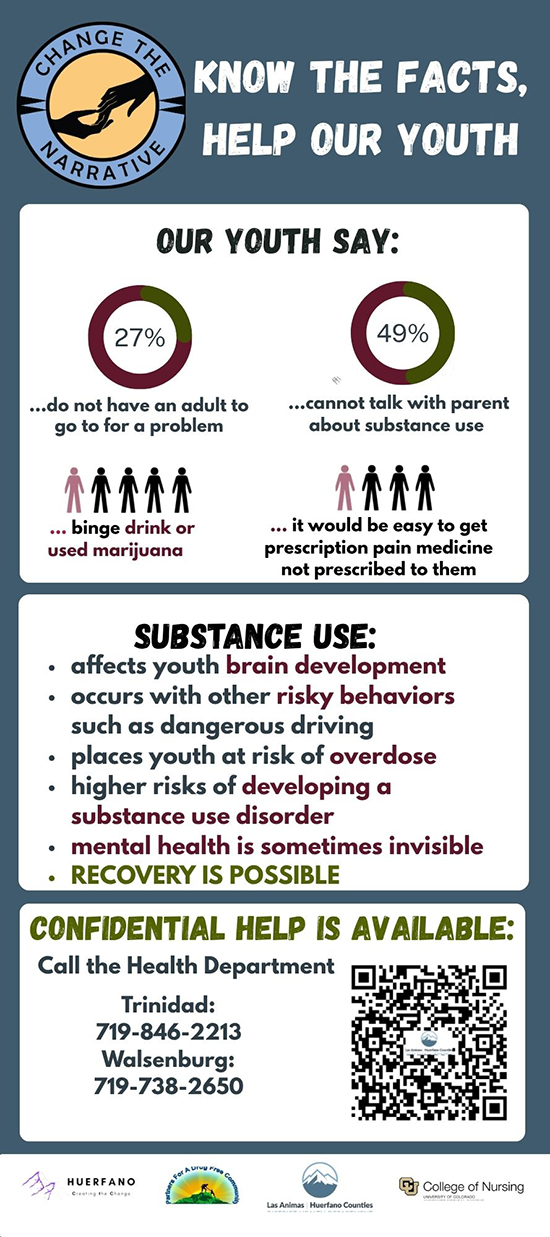
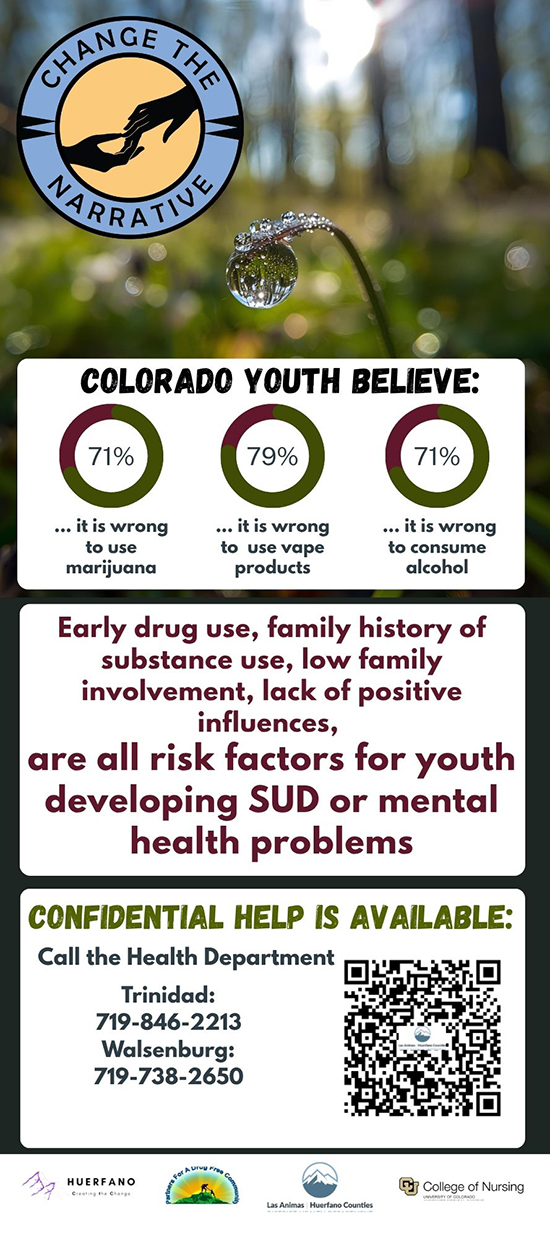
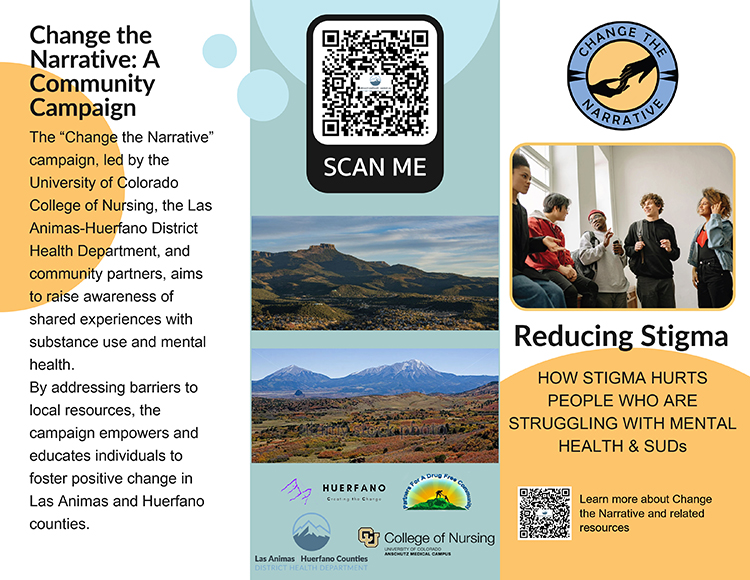
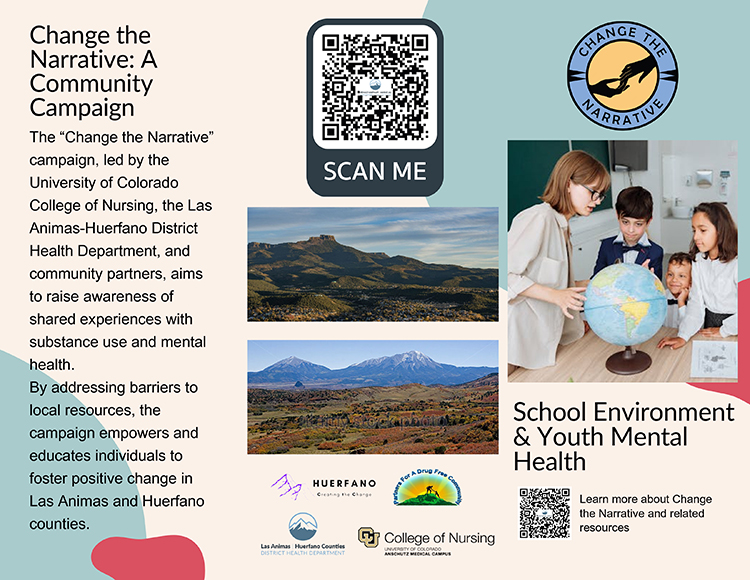
The resulting materials emphasized people-first language, bright and cohesive designs, and imagery that reflected community life and values. These were shared through a variety of formats—posters, flyers, infographics, printed handouts, and social media posts—distributed throughout both counties to foster visibility and engagement.
Community collaboration played a central role in refining our designs. By participating in local events such as summer festivals and 4-H stock shows, the Change the Narrative team was able to meet residents where they were—listening directly to feedback, gathering insights, and testing materials in real time.
Co-creation meant asking thoughtful, actionable questions: What stands out to you? What could be improved? How can we make this feel more like you and your community? In appreciation for their time and input, participants received small incentives—gift cards and co-branded items such as sunglasses, reusable straws, pens, and toys—which also served as a way to extend campaign visibility and spark conversation.
Through this cycle of collaboration, feedback, and shared creativity, Change the Narrative built authentic, community-driven messages that not only reflect the people of Southern Colorado but also empower them to lead the conversation around mental health, recovery, and resilience.
Guiding Principle
Building authentic communication starts with listening
The social media component of the Change the Narrative campaign centers on creating youth-responsive, short-form content designed for platforms such as TikTok and Instagram. Using qualitative insights, trend mapping, and performance data from comparable prevention campaigns, the project is meant to produce a library of visually consistent, culturally relevant videos that align with how rural youth engage with digital media. This work will strengthen the LAH Health department’s capacity to deliver modern, stigma-reducing prevention messaging and establish a scalable framework for ongoing social media–based youth engagement.
Step 8: Plan the Implementation
- Define message strategy and tone; center positive affirmations (hope, connection, resilience).
- Map communication and outreach: low‑cost repeatable messages, face‑to‑face meetings, local media, social media, postings in schools/clinics.
- Establish objectives and SMART goals; plan budget/resources; engage partners for coherent framing.
- Evaluation & sustainability: measure processes, outcomes, and short/long‑term goals (pre/post surveys, focus groups, social media analytics). Root messaging in existing programs to expand the knowledge‑pool and sustain efforts.
CHANGE THE NARRATIVE
Message development: identify a clear strategy and tone
Step 9: Launch, Celebrate, and Learn
- Kick off with a fun event, feature a local voice, or partner with an existing celebration.
- Gather feedback: What do people think? What can you improve?
- Track what worked (shares, turnout, calls for help, etc.)
- Celebrate wins and plan how to keep the momentum going.
Guiding Principle
Behavioral health stigma will not end with one message or campaign. Change happens through sustained, multi-layered efforts that combine education, storytelling, and partnership.
- Organize community forums and art or storytelling events.
- Share evidence-based facts and recovery stories across media platforms.
- Encourage local champions—people in recovery, family members, and providers—to lead conversations.
- Evaluate your impact regularly to strengthen long-term success.
Toolkit Materials & Templates
Campaign materials included or suggested:
- Needs assessment
- Campaign planning worksheet
- Print templates: posters, infographics, tri‑fold brochures*
- SWAG for conversation & event engagement
- Social media sample posts, short videos, and animations (youth‑friendly)
Platforms for Media Creation
- Adobe Illustrator
- Canva
- TikTok
Materials included
- Purpose: High‑reach, awareness‑plus‑action assets for community spaces.
- Audience: Community (tailored for youth, adults, or both)
- Format details: CMYK; 0.125 in bleed (full picture printing, no white borders); preferred high-quality paper (for low‑glare readability).
- Accessibility: high contrast, large headlines (≥32 pt), QR codes ≥1.25 in, (alt‑text available for digital versions ).
- Anchor: Campaign logo, QR code to website content, and Health Department support team.
- Platform: Canva and Adobe Illustrator – both provide ready-to-print options in-platform
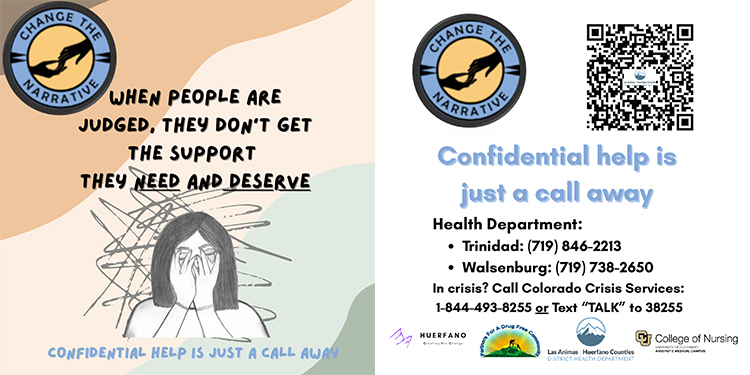
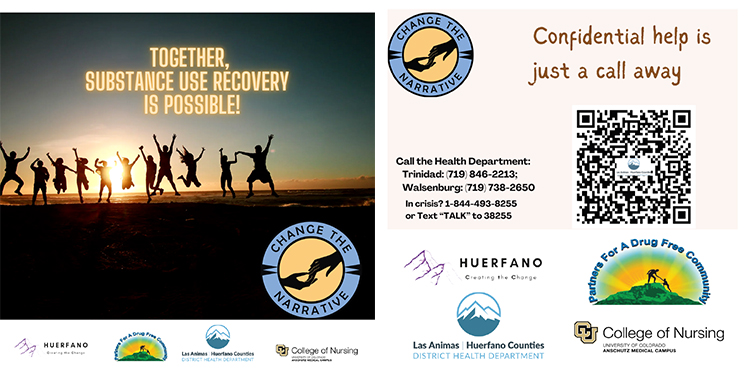
- Campaign materials: Coasters (3.75in x 3.75 in; rounded corners)
Campaign Materials: Coasters
Materials designed in Canva, cork-backed option available for printing
Distribution: handed out at tabling events to increase campaign awareness and provide individuals with key contact information
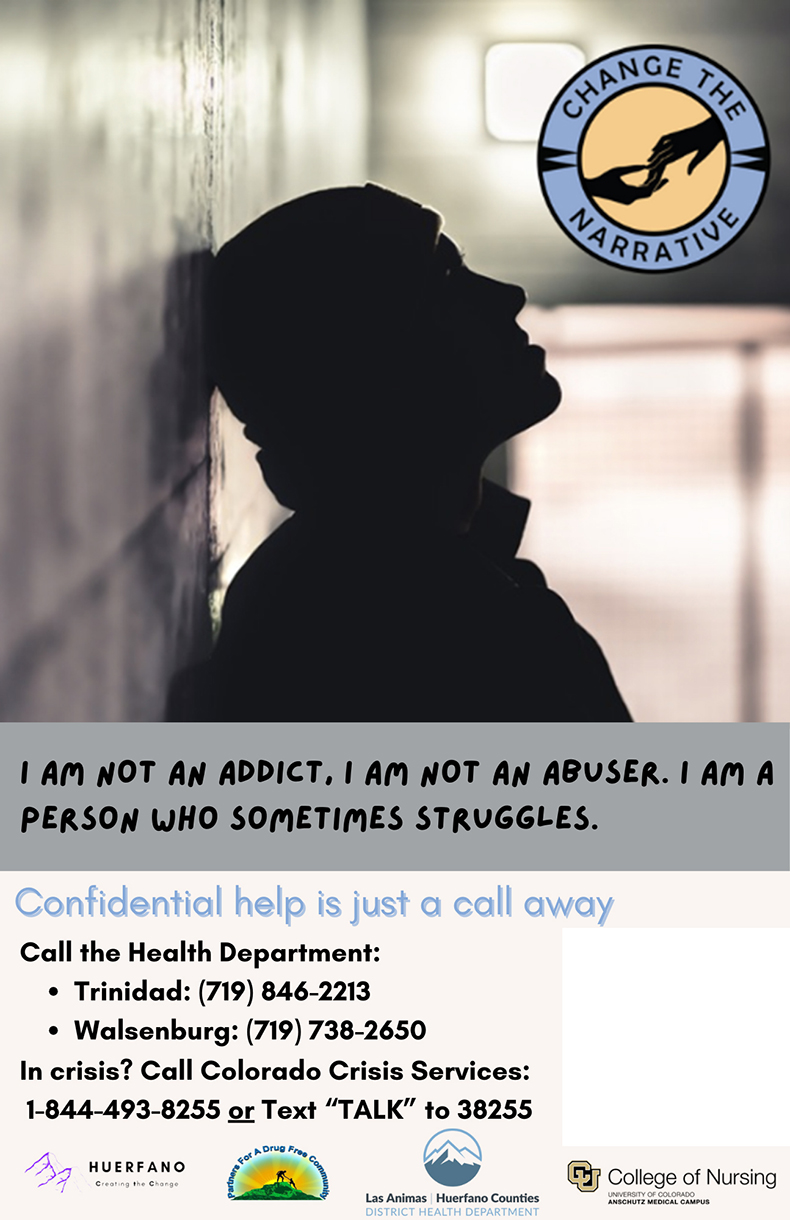
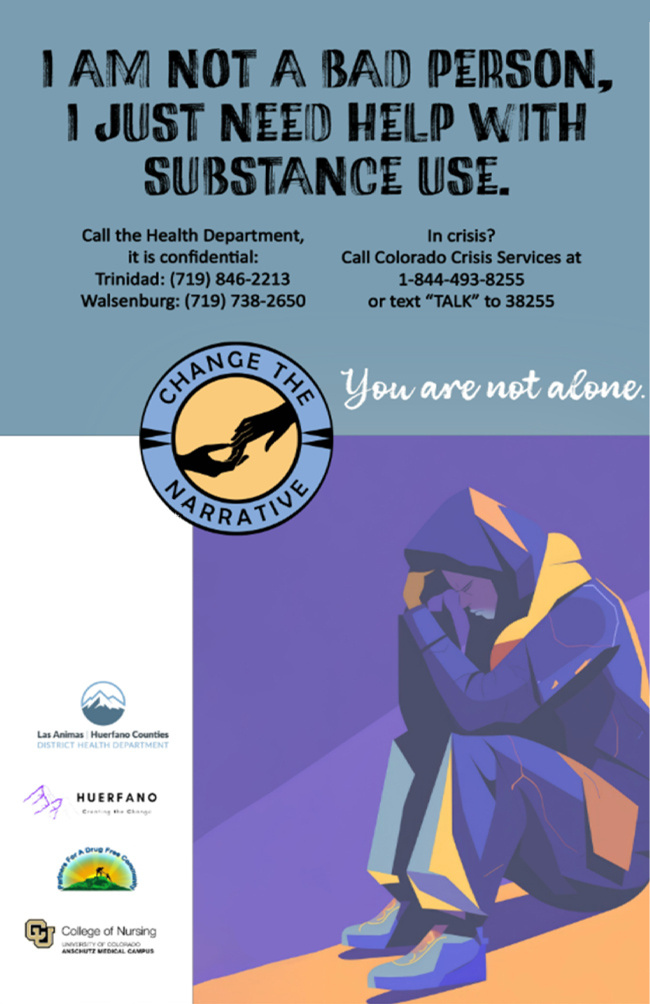
Campaign Materials: Posters
Materials designed in Canva and Adobe Illustrator
Distribution: pasted throughout the community (e.g., stores, local businesses, schools, community centers, and health departments)


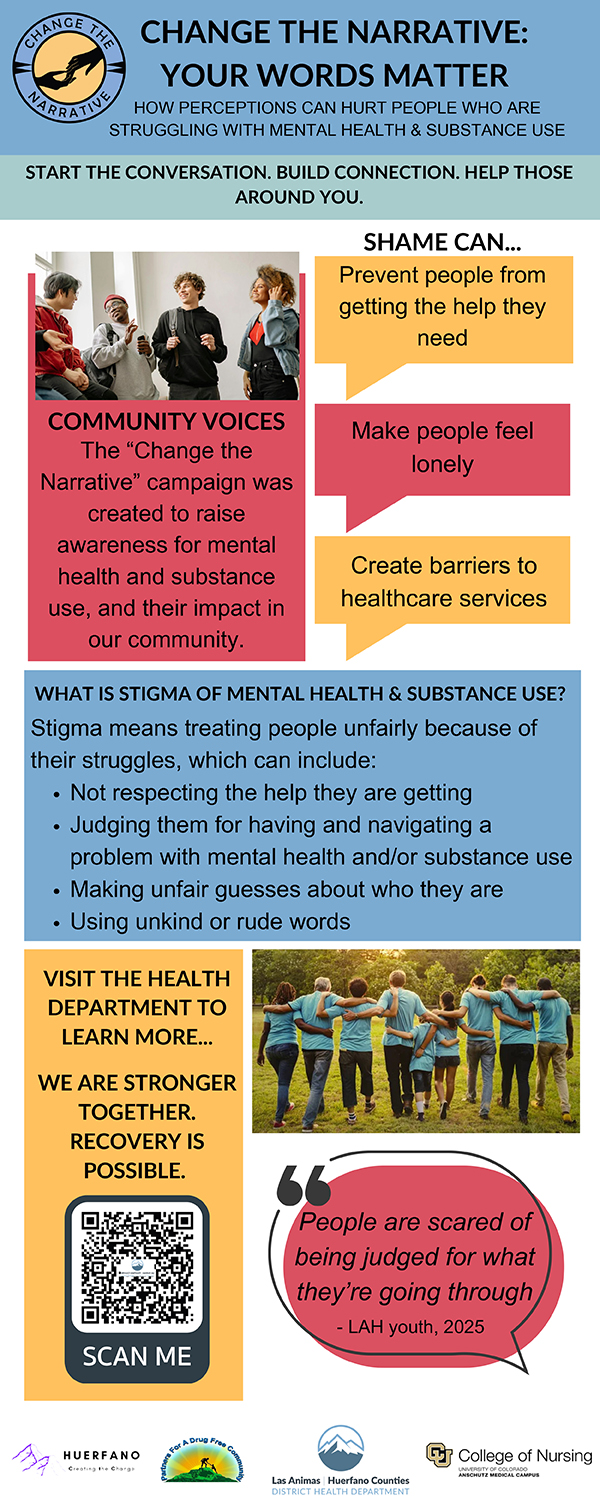
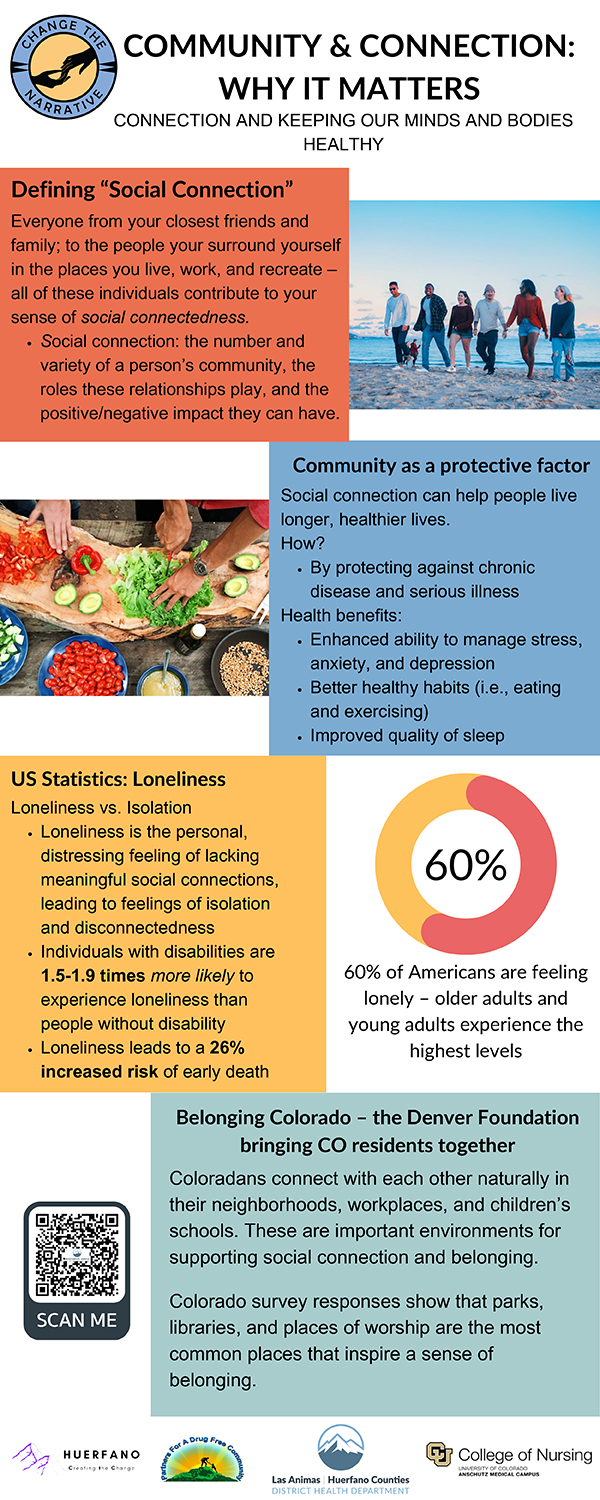
Campaign Materials: Infographics
Materials designed in Canva – printing options available
Distribution: both digitally and print-accessible for spreading throughout the community
- Designed specifically for posting in schools and health department/centers


Campaign Materials: Bi- and Tri-fold Brochures
Materials designed in Canva
Distribution: handed out at tabling events to increase campaign awareness and provide individuals with key contact information, in addition to being shared with the health department and local schools